

Laser Tattoo & Permanent Makeup Removal
Laser tattoo removal is an advanced treatment designed to progressively break down unwanted tattoo pigment within the skin.
Short pulses of laser energy are selectively absorbed by suitable tattoo pigments, causing the pigment particles to fragment. These smaller particles can then be gradually processed by the body’s natural clearance mechanisms over the weeks following treatment.
At SR Integrated Health & Wellness Clinic, every tattoo is assessed individually. Tattoo colour, pigment composition, depth, density, location, age and your skin type can all influence how a tattoo responds and how many treatments may be required.
What Can We Treat?
Following assessment, laser treatment may be suitable for:
- Unwanted professional tattoos
- Amateur tattoos
- Partially faded tattoos
- Tattoos requiring fading before a cover-up
- Selected cosmetic tattoos
- Eyebrow tattoo pigment
- Microblading
- Selected permanent makeup pigments
Complete removal cannot be guaranteed, and some pigments respond considerably better than others.
How Does Laser Tattoo Removal Work?
Laser energy is delivered in very short pulses and targeted towards pigment within the tattoo.
When an appropriate pigment absorbs the laser energy, it fragments into smaller particles.
The body then gradually clears these particles over time.
This is why tattoo removal is a progressive process rather than a treatment that physically removes all of the tattoo during one appointment.
Different Tattoo Colours
Tattoo colours do not all respond equally to laser treatment.
The wavelength of laser energy required depends partly on the colour and composition of the pigment being targeted.
Some dark pigments can respond particularly well, while certain lighter or more complex colours can be more resistant.
Modern tattoo inks can also contain mixtures of pigments, so response cannot always be predicted simply from the colour visible on the skin.
Your tattoo will be assessed before treatment and realistic expectations discussed.
Eyebrow & Permanent Makeup Removal
Laser can also be used for selected unwanted eyebrow tattoos, microblading and permanent makeup.
However, cosmetic pigments require particularly careful assessment.
Unlike conventional tattoo inks, permanent makeup pigments may contain mixtures of substances that can respond unpredictably when exposed to laser energy.
Some pigments can temporarily or permanently change colour or become darker following laser exposure.
For this reason, we do not treat permanent makeup in exactly the same way as a conventional tattoo.
Appropriate assessment and test treatment are particularly important before proceeding.
Fading Tattoos for a Cover-Up
You do not necessarily need to completely remove an existing tattoo.
Some patients simply want enough pigment removed to allow their tattoo artist greater flexibility when creating a cover-up.
A planned course of laser treatments can progressively reduce pigment density before the new tattoo is undertaken.
Your tattoo artist can advise how much fading they require before beginning the cover-up.
What Happens During Treatment?
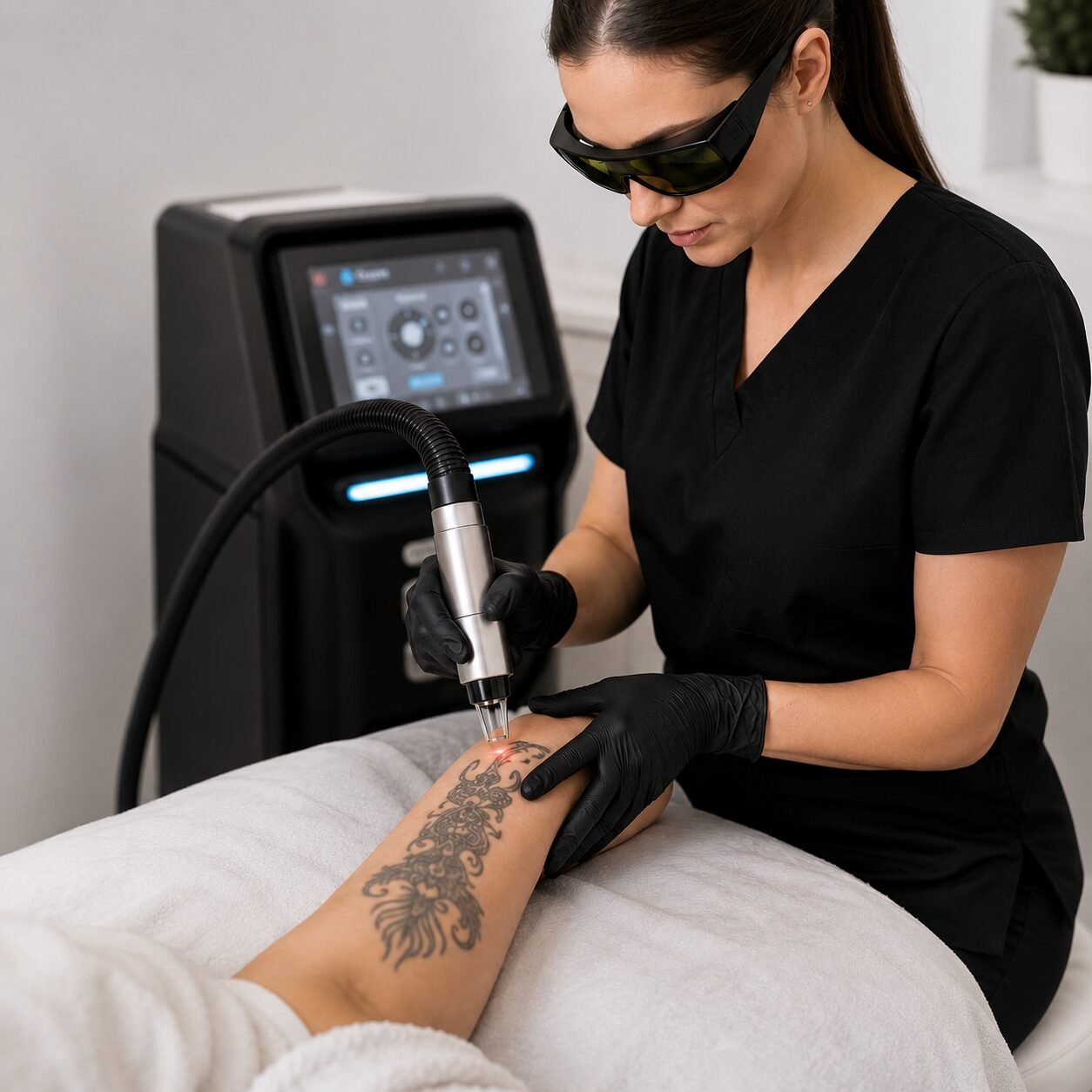
Your tattoo and skin will first be assessed and appropriate protective eyewear provided.
The laser handpiece is then used to deliver controlled pulses across the selected tattoo pigment.
Patients commonly describe the sensation as brief, sharp or snapping.
The length of the appointment depends on the size and complexity of the tattoo.
What Will the Tattoo Look Like Afterwards?
Immediately following treatment, temporary whitening or frosting of the tattoo can occur.
The area may subsequently appear:
- Red
- Swollen
- Tender
- Warm
- Slightly raised
Blistering or superficial crusting can occur following tattoo laser treatment.
These effects form part of the potential treatment response and appropriate aftercare is important.
You should avoid picking or disturbing any crusts or blisters while the skin heals.
How Many Treatments Will I Need?
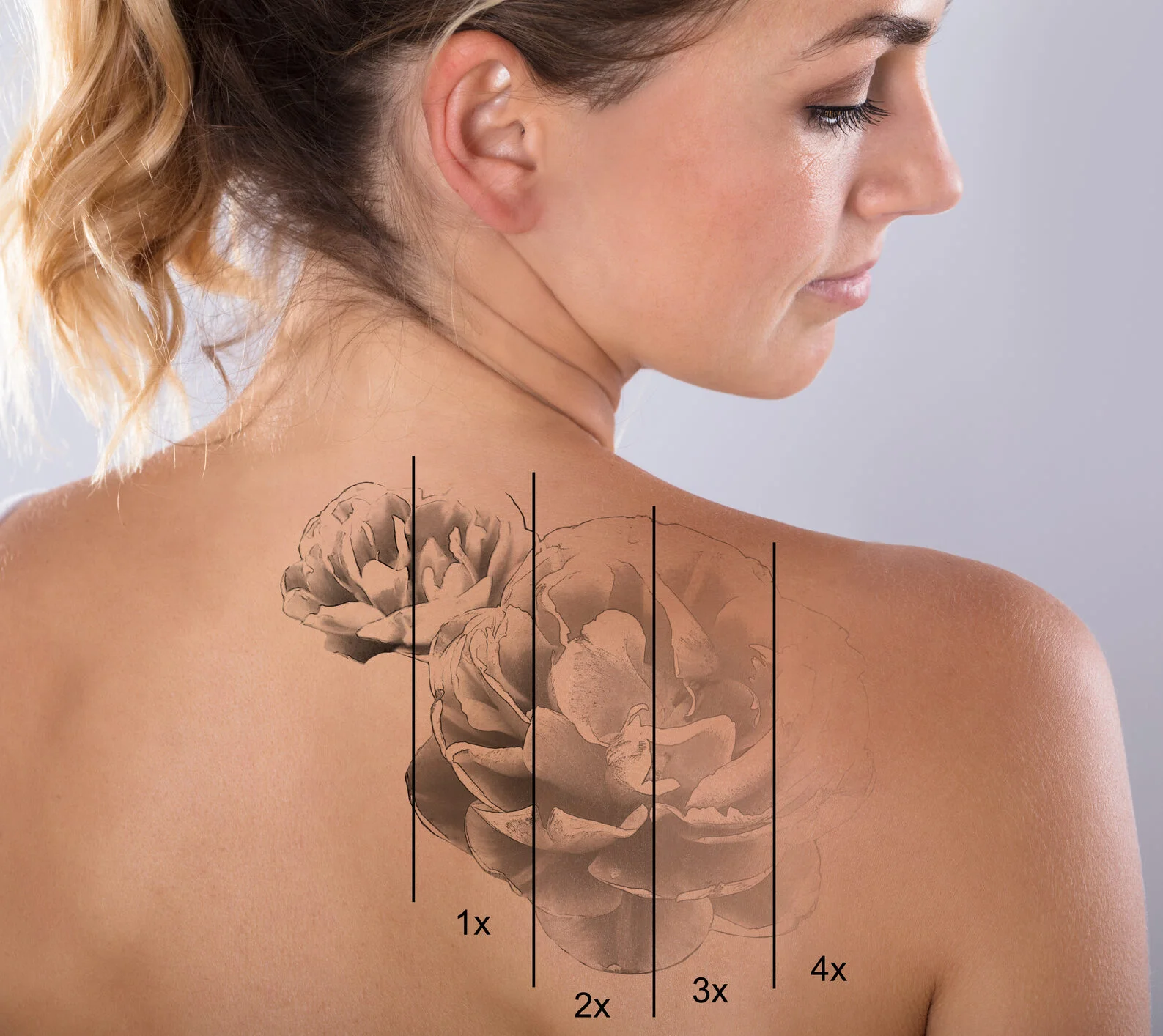
There is no universal number of sessions for tattoo removal.
The number required can depend on:
- Tattoo colour
- Ink composition
- Pigment density
- Depth of pigment
- Professional or amateur application
- Age of the tattoo
- Tattoo location
- Previous laser treatment
- Individual biological response
Professional tattoos commonly require multiple treatments because pigment is often deposited densely and at relatively consistent depths.
We will assess progress throughout your treatment course rather than promise a predetermined number of sessions.
Why Are Treatments Spaced Apart?
The laser fragments pigment, but your body requires time to process the treated particles and the skin must recover before further treatment.
Treating too frequently does not necessarily produce faster removal and may increase the risk of complications.
Appropriate intervals will therefore be recommended between sessions.
Can Every Tattoo Be Completely Removed?
No practitioner can guarantee complete tattoo removal.
Some tattoos respond extremely well, while others retain residual pigment despite multiple treatments.
Certain colours and pigment formulations can also be more difficult to remove.
Our aim is to provide realistic expectations from the outset and review your response as treatment progresses.
Consultation & Patch Testing
Before starting treatment we will assess your:
- Tattoo or permanent makeup
- Pigment colours
- Skin type
- Medical history
- Medications
- Previous laser treatments
- History of scarring
- Recent sun exposure
- Treatment goals
Patch or test treatment may be required before proceeding with a larger area.
Risks & Safety
Laser tattoo removal is not without risk.
Potential effects and complications can include:
- Redness and swelling
- Blistering
- Crusting
- Temporary skin sensitivity
- Hyperpigmentation
- Hypopigmentation
- Changes in skin texture
- Scarring
- Incomplete pigment removal
- Unexpected colour changes in certain pigments
Relevant risks will be discussed with you before treatment.
Aftercare
Following treatment, you will receive specific instructions on caring for the area while it heals.
Keeping the area clean, avoiding picking or scratching and protecting the treated skin from sun exposure are particularly important.
You should contact the clinic if you experience an unexpected reaction or have concerns during healing.
Start With an Assessment
If you are considering tattoo or permanent makeup removal, you don’t need to know how many sessions you require before booking.
We will assess the tattoo, your skin and what you are hoping to achieve before discussing whether laser treatment is appropriate and developing an individual treatment plan.